Salvaging the future: l’art récupération

For the holidays: Crèche scene by Burkina Faso-based artist Hervé Ouedraogo

For English speakers, the French verb “récupérer” is one of those false friends: it doesn’t exactly mean “to recuperate,” though many of their meanings overlap. A better translation would be “to recover,” as in to get something back that was lost; “to salvage” comes pretty close too.

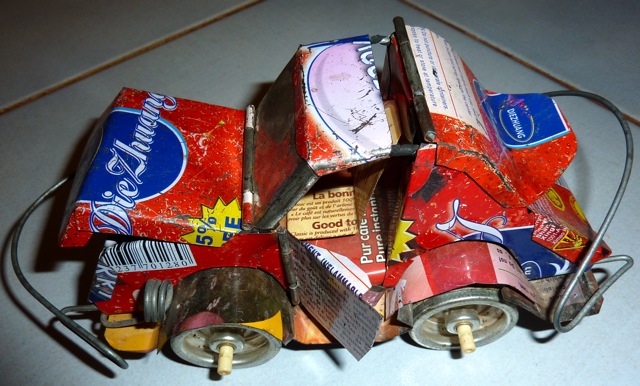
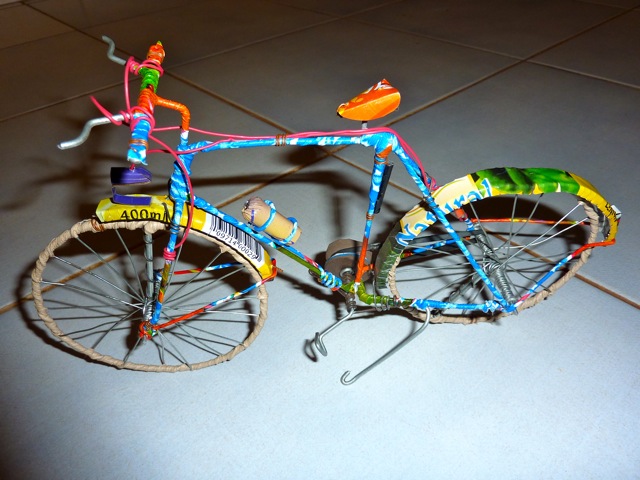
Visitors to almost any West African crafts market nowadays are likely to find, alongside the wooden masks, leather goods and indigo cloth, ingenious objects made essentially from “found objects” or junkaluminum cans, old auto parts, wires from broken radios, et cetera. The French term for this category of objects is “l’art récupération.” Most often, these works are miniature versions of some of the same machines from which their components were salvaged: automobiles, motorcycles, and bicycles are among the most common on display.

Miniature auto made from hairspray cans

Mountain bike – note details like brake cables, bottle cage, etc. (click on photo for a larger version)

You might be tempted to think of these objects as toys rather than art, and in fact they come out of a long tradition among African children of making playthings out of junk (e.g. here or here). The difference here, however, is that these objects are made by grown-ups, and they don’t function especially well as toys. (They break quite easily, as my son Zachary will tell you.) And the people who make them are calling themselves “artistes récupérateurs“.

These days I’m seeing more and more salvage-art objects representing not machines, but animals or people. A whole category now exists of figures made with spark plug torsos (see the crèche above, and the angel below).

Angel, by Bamako récupérateur Zoumana Kanté

What is it about salvage art that appeals to Westerners like me? Personally, I find it more germane to the lives of most Africans in the 21st century, especially those who live in cities like Bamako, where things like soda cans and spark plugs are much more common and relevant than mudcloth or carved funeral masks.

Pepsi papillon

I also like the fact that these objects are literally salvaged from scrapyards and garbage heaps — not for this practice’s “green” effects, which are surely negligible, but for the way it embodies a creative response to privation. In Africa the credo “reduce, reuse, recycle” is motivated by economic necessity rather than ecological concern. In Bamako we don’t separate our recyclables from our garbage: others do that for us, taking the bottles, cans and cardboard right out of our trash can for resale or reuse.

For this reason, I believe, l’art récupération also carries a political message. (Here I’m inspired by the writings of anthropologists like James Ferguson and Charles Piot.) When a miniature car is made by someone who cannot afford to drive a car, or a miniature airplane by someone who cannot buy a plane ticket, these works of salvage art serve as reminders of the tremendous inequality that prevails at the global level. They represent a claim to inclusion in the modern world by those who lack the means to live out their material aspirations. Here’s what this art says to me: They want the same future we want, but at least for the time being, they can only salvage it out of junk.

Posted in Uncategorized | 1 Comment

How to organize a public event in Mali

Stupid of me. I should’ve known better than to arrive on time.

I’d been told the event would begin at 3 p.m., and it was just a few minutes past the hour when I got to the venue, the size of a respectable U.S. high school gymnasium, but which was still mostly empty. Soon after, one of the organizers showed me his copy of the schedule, and I saw that nothing was actually meant to begin until 4:00.

In the hour I spent watching preparations unfold, I realized that public functions like this are dictated by cultural patterns, and I thought about the unspoken rules by which such events play out. If you’ve ever watched more than 20 minutes of a Malian TV news broadcast, you know that these events include a predictable set of elements. So for this blog post I’ve decided not even to write about the event itself. Perhaps you can guess what kind of happening it was. The substance is more or less irrelevant here; it’s the format I’m interested in.

Here, then, are the 10 things you’ll need to organize a successful public event in Mali.

1. Les cartes d’honneur. Printed on fine cardstock, the carte d’honneur is like an invitation, although you don’t always have to have one to attend. It outlines the “who, what, when and where” of your event, and sometimes mentions the sponsors. Remember to indicate a starting time one hour ahead of when you expect things will actually begin.

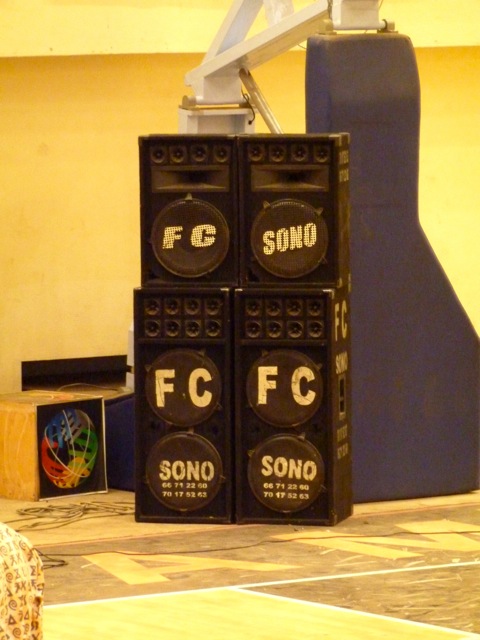
2. La sonorisation. If you’re going to be heard, you’ll need a sound system big enough to drown out background noises and raucous crowds. You can use it for music (see item 3 below) and speeches (see item 7 below). A microphone, PA and loudspeakers can be rented for the occasion.

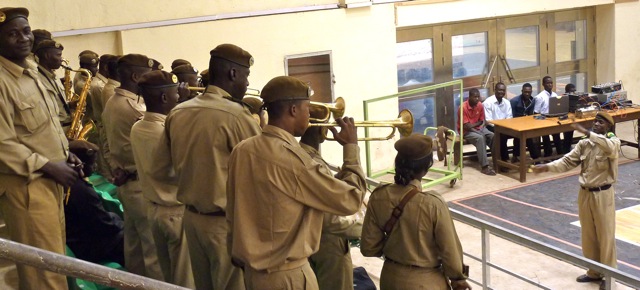
3. Les musiciens. For many of these events, especially those outside Bamako, “traditional” musicians are hired to provide some ostensibly local flavor. In Bamako, it may be a small ensemble backing griot singers, a pop group, or some other category. For the event I attended, it was a military band wearing khaki uniforms and brown berets.

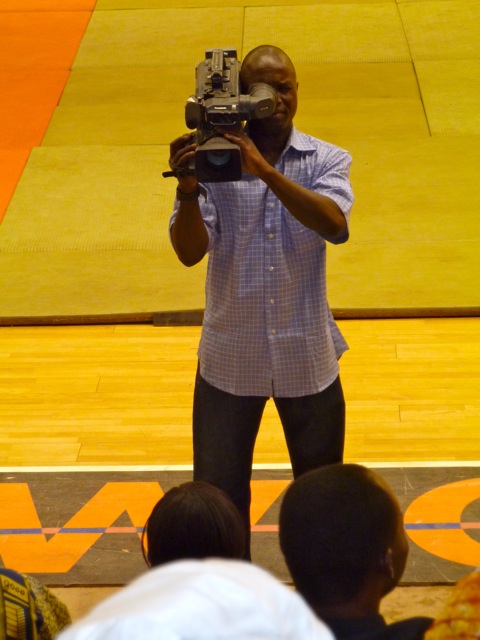
4. Les médias. If you can’t have your event broadcast to a wider public, it may as well not have happened. Your goal should be to get featured on the ORTM evening news. Make sure to get plenty of shots featuring local color and culture, as well as any dignitaries present (see item 6 below).

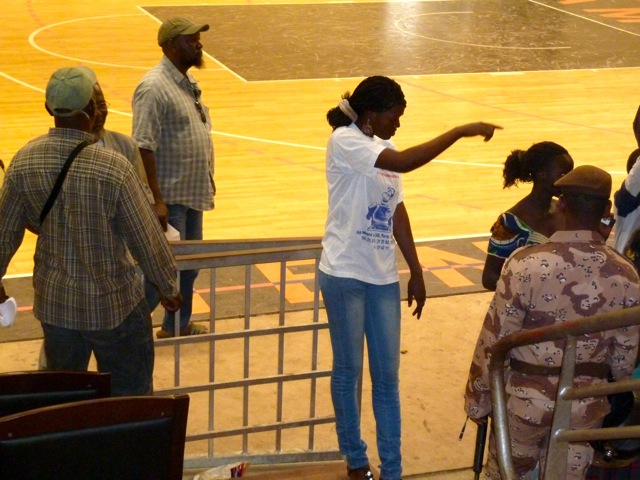
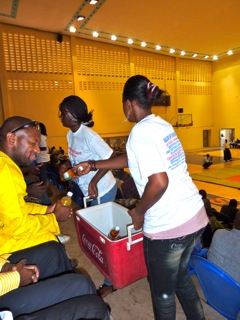
5. Les hôtesses. Hire some attractive young women and provide them with matching outfits. For the classiest functions, you should get wax-print cloth printed up to commemorate your event, and have your hostesses wear outfits made from the commemorative cloth. If that’s too pricey, get some t-shirts made for them — silk-screened if you can afford it, stenciled otherwise. The hostesses’ job is to look nice while showing people where they’re supposed to sit. Mostly they do a lot of pointing.

6. Les dignitaires. Malian society is based on what political scientists call “patron-client systems,” wherein powerful individuals bestow favors on those less powerful and receive their loyalty in return. The importance of the dignitary at your event signals the importance of your organization. If the President of the Republic cannot attend, at least try to get a cabinet minister, local prefect or mayor. And no matter how late your VIP is, your event will not begin until he or she arrives. (Luckily ours, the minister of youth and sports, was only 20 minutes late!)

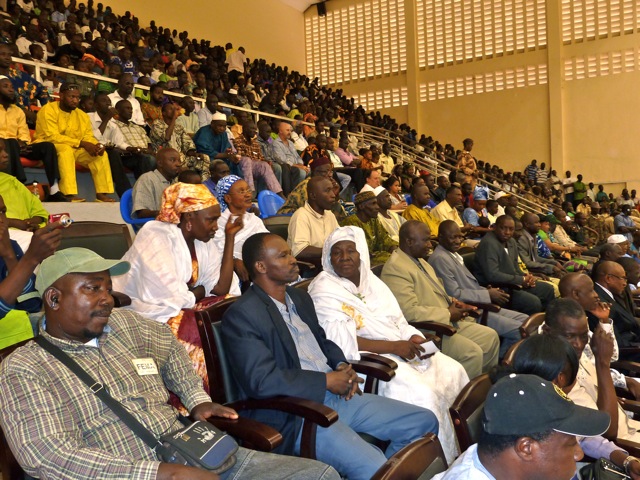
7. Les chaises résérvées. You can’t have VIPs without VIP seating! Only people with cartes d’honneur get reserved seats. Dignitaries must be seated front and center, pre- ferably in padded armchairs. If yours is an outdoor event, dignitaries must be in the shade. People seated in the VIP area can also expect the hostesses to serve them free soft drinks. Let everyone else sit on benches or stand.

8. Les discours. Speeches may or may not be made by the dignitaries, but will definitely be made to them. These speeches will start off addressing them by title (“Monsieur le ministre, monsieur le maire, honorables invités…“). This serves to remind them how important they are, and to remind your viewers how important you are for hosting them.

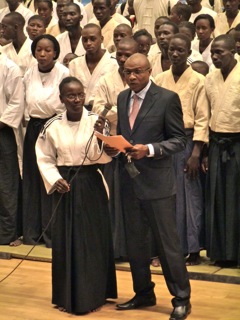
9. Les tubabuw. In a place like Mali, one of the best ways to show your event matters is to have some token white people (tubabuw) in attendance. Ideally they will be important white people (e.g. diplomats, visiting foreign dignitaries, or NGO officials). Realistically, however, any random white folks will do. Make sure they appear prominently in the crowd shots recorded by your videographer, so that viewers will notice them and realize how important you are. When filming a stage, a podium or an audience, ORTM cameramen are trained to zoom in on white faces. In a pinch, Chinese may serve as a substitute for white people. (Try to spot at least two token tubabuw in the photo for item 7, above right.)

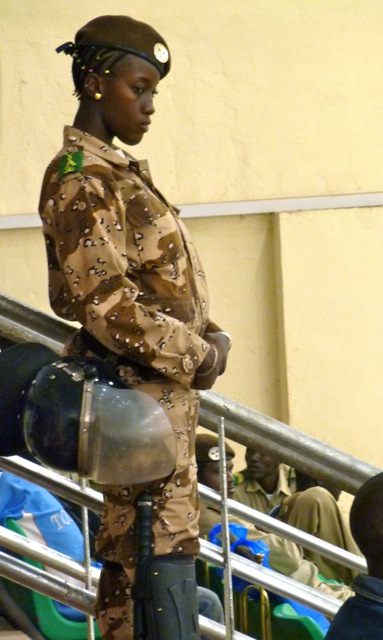
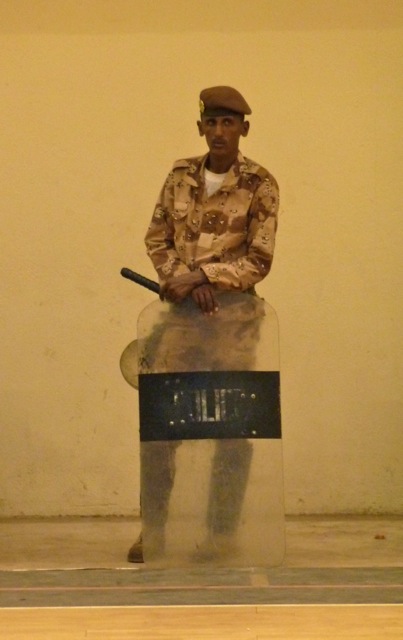
10. Les policiers anti-emeutes. Where public events are concerned, nothing says classy quite like having riot police on hand. Don’t ask me why, but an event without the threat of audience members being clubbed or tear-gassed lacks a certain je ne sais quoi. The presence of cops or paramilitaries with night sticks, helmets, shields and shin pads — however unnecessary it may be — indicates that the organizers have political clout and aren’t afraid to use it.

(One of the first events I ever attended in Mali back in 1997 was a village  ceremony featuring musicians, a dusty clearing for dancing, and a large crowd of spectators. I recall one adult who kept the crowd of mostly pre-teen spectators in line; he stripped a thin branch from a tree and used it periodically to beat the kids back from the dancing area. Since then, I’ve noticed public events here often feature someone whose job is to keep rowdy kids from getting out of hand — even when there are no rowdy kids present. And you can’t go to a big concert or sporting event in Bamako without getting at least a whiff of tear gas at some point.)

Now you know the key ingredients for making your very own Malian function a huge success. Remember, use this knowledge for good, never for evil.

Posted in Uncategorized | 1 Comment

Motor city

I associate auto shows (based, at least, on their television advertisements) with huge convention centers, American-style marketing excess, and blonde models — all of which are rather hard to find in Bamako. So I never would have predicted that I’d attend my first auto show here, of all places, in the Malian capital. And yet that’s precisely what happened. It is also, as it turns out, Bamako’s first auto show.

The event is pretty modest — fewer than ten displays by auto retailers, plus a few peripheral displays by banks (marketing auto loans), an insurance company (marketing auto policies), and a soft-drink bottler (marketing, um, soft drinks). There is even a kids’ fun area featuring a moon bounce and some kind of mini-golf putting green. Everything is housed in the courtyard of the Bamako International Conference Center, formerly known as the Palais des Congrès.

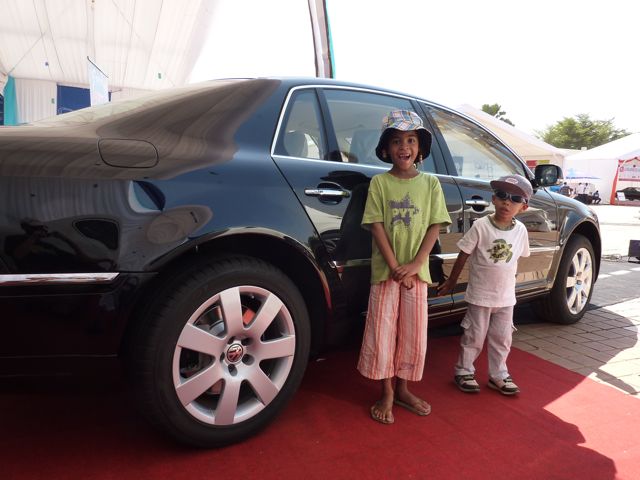
After getting past the games area, I head straight to the Volkswagen display tent, since I know one of the guys there, our daughters being classmates in school. Volkswagen of course makes the SUV known as the Touareg, which happens to be named after a group of  nomads who inhabit northern Mali. I ask the VW rep if Touaregs are big sellers among the Touareg; he avows that they are. He also shows me the Phaeton, an entirely hand-made luxury sedan that boasts a leather interior and on-board mini-fridge. It sells here for something like 60 million CFA francs, well over US$100,000. And the Phaeton has available kevlar panels and ballistic glass. VW is hoping to sell some to the Malian government for driving its VIPs around.

The VW Phaeton

I am ambivalent about seeing such an expensive car in Bamako. On the one hand, who am I to say Malians shouldn’t drive Phaetons? But the fact that it costs 157 times Mali’s  annual per capita income gives me pause. (By comparison, an automobile costing 157 times the U.S. annual per capita income would sell for $7.2 million.) Perhaps I should hail the Phaeton’s arrival in Bamako as another positive development of globalization, a sign that Mali is growing economically and finding its place in the world. Yet the benefits of growth have been concentrated in the hands of a few, while most Malians have seen their living conditions stagnate over the last 15 years.

The Bamako auto-moto show only has a few motorcycles on display, all of them Yamahas. Just a decade ago, Yamaha had a near-total monopoly on motorbikes in Mali. If you wanted something on two wheels bigger than a moped, you pretty much had to get a Yamaha. They still sell their Japanese-made motorbikes, like this Crypton model, which sells locally for about 1 million CFA francs including tax (approx. US$2000).

The Yamaha Crypton. I must say, the spokesmodels at this auto expo aren't what I expected....

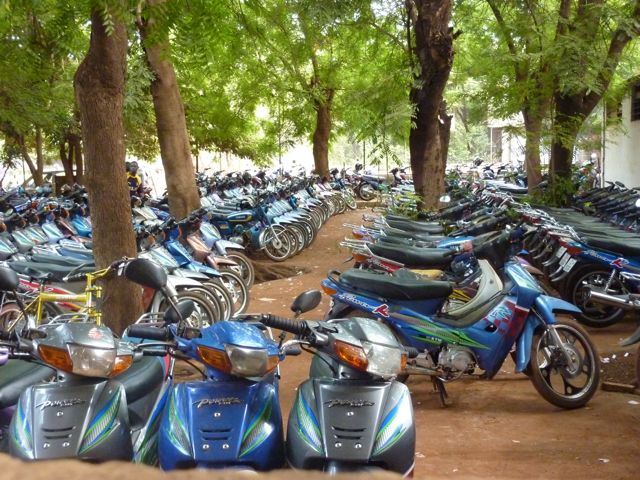
Nowadays, however, Malians aren’t buying very many Yamahas; they prefer a motorcycle officially known as the Cub, but called the “Jakarta” in local parlance. Even if it isn’t quite as sturdy as a Yamaha, it costs about 60 percent less than Yamaha’s cheapest model. This motorcycle’s manufacturer, Guangzhou Tian Ma Group Tian Ma Motorcycle Co., Ltd. (say that ten times fast!), is not represented at the Bamako auto/moto show. But why would they come? Without any advertising, their product has achieved complete market dominance. Since about 2002, Bamako’s streets have been flooded with “Jakartas.” I am not sure how to explain the local success of this bike, which is on a scale one doesn’t see in other West African countries. How can it cost so much less than other bikes? Some Bamakois have told me the Malian government exempted Jakartas from import duties, but I have yet to confirm this. For whatever reason, Jakartas now make up about 90 percent of all motorcycles on the road here.

A typical Bamako parking lot. Can you spot the non-Jakartas in this picture?

For whatever it’s worth, the Yamaha Crypton is also being copied by Chinese manufacturers, which is only fair, since Yamaha’s “cub”-type motorcycles were based on earlier Honda models. Perhaps turnabout is fair play, but the Chinese go so far as to put the name “Yamaha” on these bikes. Is Yamaha aware of this fact?

If you’re looking for a symbol of globalization in Mali, forget the Volkswagen Phaeton. Go with the humble Tian Ma Cub, which has altered Bamako’s social landscape. Precisely how it has done so will be the subject of another post….

Posted in Uncategorized | Leave a comment

Tabaski saga on four legs

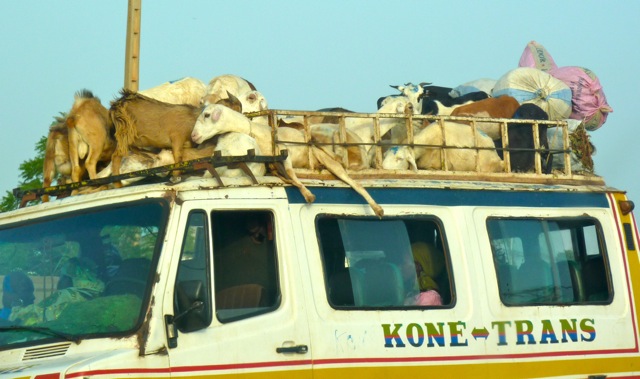
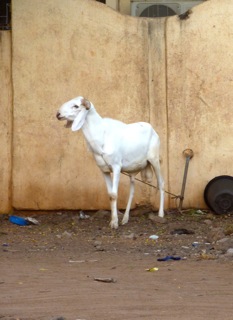
A few weeks ago, a population of hirsute strangers began gradually infiltrating Bamako. Where only a few thousand of them used to live here, their ranks soon swelled to hundreds of thousands. Newcomers to the city, they could be seen moving in unruly bands down residential streets. They loitered on street corners downtown. Much to the annoyance of local drivers, they had no idea how to cross busy streets. They squatted in public spaces, making uncouth noises.

I am talking about a particular type of rural-to-urban migrant, known locally as saga. I am talking about sheep.

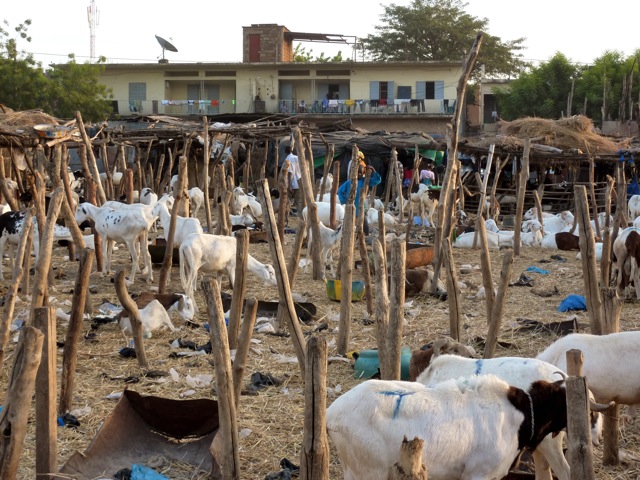
Badalabougou livestock market, the day before the holiday

In the Islamic calendar, the feast known in Arabic as eid al-adha is the biggest holy day of the year. In much of West Africa, this day is known as Tabaski. In the Bamanan language, it is called seli-ba, or “the big holiday.” In 2011, most Muslims observed it on Sunday, November 6th. And the most visible feature of Tabaski is the sheep to be slaughtered and eaten on the holiday. Which explains why in French-speaking African nations like Mali, the holiday is sometimes referred to as la fête du mouton (“the feast of the sheep”)

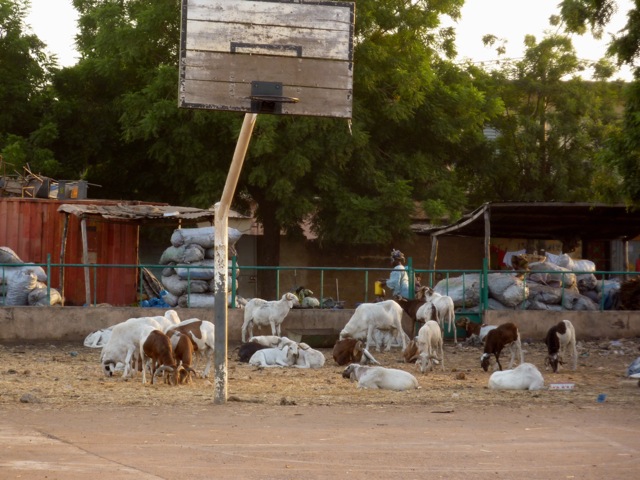
Tabaski sheep taking over a neighborhood basketball court

Muslims who can afford to do so are enjoined to sacrifice one of their best animals on Tabaski. Each head of household is supposed to perform this religious duty. In some parts of the world, the preferred sacrificial beast is a cow or a goat. In Mali, it is saga — sheep. And the fact that millions of Malian families need one by the same date every year has consequences.

Mali is full of livestock. Despite the country’s arid climate, it is a net exporter of cattle and sheep. Malian sheep in particular are often sold in neighboring countries during the run-up to Tabaski; I’ve even heard that in years past they were exported to Libya by air. In rural Mali, Muslim families keep their own animals and usually set one aside for the annual Tabaski sacrifice. In cities like Bamako, however, few households keep sheep. Which means that before the holiday arrives, Bamako’s need for these animals must be met by rural suppliers.

Getting chauffered around town

With so much demand concentrated in a short period, prices inevitably go up — at least double by some accounts. Bamakois rightly complain about the rising cost of living in their city, but the cost of holiday sheep has exceeded all expectations. An animal that might have cost the equivalent of US$40 a decade ago now costs over $100; you can’t get even a small sheep before Tabaski for under $75. That’s a lot of money in a poor country like Mali. The Malian press carries consistent reports of price-gouging by livestock vendors. Many potential buyers have been simply priced out of the saga market this year. Some Bamakois wait until the eve of Tabaski, hoping to get a bargain from vendors with too many animals left unsold. Inevitably, politics comes into play, with some contending the state should do more to control prices and prevent so many sheep from being sold abroad when they are in high demand at home.

Hours before Tabaski 2011, a ram awaits its fate outside its owner's home

Islam doesn’t force families to impoverish themselves out of respect for this holiday tradition. Only families with means are required to sacrifice a sheep or other animal. But in Bamako, the sacrifice of a saga carries considerable cultural value. It combines the tasty protein infusion of the Thanksgiving turkey with the scriptural authority of the Passover matzo. Which means that even many families that cannot afford a sheep will scrimp and beg and borrow to get one.

In the last two weeks, three different men I know have approached me for financial assistance in obtaining their families’ Tabaski sheep. When I pointed out to one father in his 50s that the requirement doesn’t apply to those of limited means, he responded that his family will be shamed in the eyes of their neighbors if they can’t sacrifice a saga on Tabaski. So the ritual has also become a question of social status — keeping up with the Diallos, you might say.

In the last few days before the holiday, roaming flocks of sheep were joined in Bamako’s streets by ambulant vendors selling knives, machetes and even hatchets for families to use in butchering their animals.  As far as I could tell, the sheep were unaware of these wares’ sinister purpose. To further bring home the message of impending bloodshed, knife grinders were at work all over the city.

Even free-range animals have to use the crosswalk

As I write these words, the evening following the mass slaughter, the smell of roast mutton pervades the city. Families are supposed to set aside a portion of their mutton for the poor, so at least some of the benefits of the more fortunate will trickle down to Bamako’s poorer residents. Muslims in other countries are allowed to substitute a cash donation to charity for the holiday animal sacrifice, but this option doesn’t appear to be popular in Mali. Everyone wants a saga. In view of Mali’s rapid rate of urbanization, increasing desertification and climate change, I wonder whether this holiday tradition will prove ecologically and economically sustainable in the years to come.

As for my family, mindful of the effect that our slaughtering an animal would likely have on my children’s delicate First-World sensibilities, my wife and I opted to forego the sacrifice. For dinner this Tabaski, we had spaghetti and meatballs instead. And it was most excellent.

Posted in Uncategorized | 2 Comments

Mourning Qaddafi; or, The Curse of the Marietou Palace

“If Mr. Qaddafi is missed and mourned anywhere, it will be in Africa, where he bought friends far and wide. In Bamako, the capital of Mali, a new campus of government buildings bears Colonel Qaddafi’s name, and all the fancy hotels advertise their Libyan ownership with giant green neon signs on the upper floors.”New York Times, Oct. 21, 2011

No doubt about it: if you want to hear kind words for Libya’s dead dictator, Bamako may be the best place to be. Since reports of Qaddafi’s demise first surfaced, it has been the buzz of the town. Commentators and editorialists throughout the region are heaping praise on the man. Two days after his death, the West African broadcaster Africable — more reliably a source of sleazy telenovelas and racy music videos than radical views — carried a gushing tribute on its Afrik Midi news show, describing Qaddafi as a revolutionary hero who, though martyred by the bullets of imperialism, will live on through his lofty ideals.

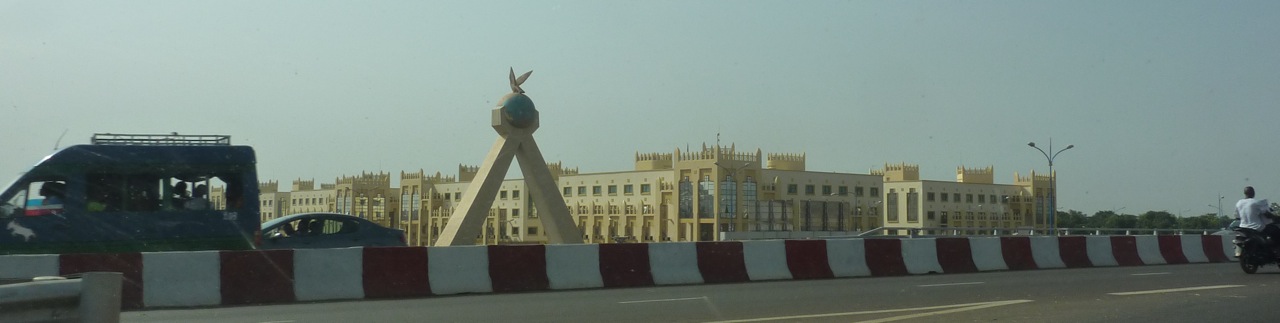
It is true that Bamako has a long history of support for, and from, Libya’s late leader. He did indeed fund a great many public projects here, from the above-mentioned government office complex (from which his name was actually removed in September after he was driven from power) to mosques and cultural centers.

Bamako’s new Cité Administrative – no longer bearing Qaddafi’s name

Meanwhile Libyan interests have bought up many of Bamako’s biggest hotels and invested in thousands of hectares of agricultural land in the Malian interior (a move some critics described as a “land grab“). The Libyan Arab African Investment Company, or LAAICO, has become one of the biggest foreign investors in the Malian economy.

Perhaps there’s something to allegations that Qaddafi simply bought the loyalty of the people in these parts. But if you scratch the surface just a little, Malians’ views on the man and his legacy turn out to be much more complicated than they might appear. I should point out that there’s little that’s specifically anti-American in these views; on the whole, Malians and Africans tend to like the U.S. and millions of them want to emigrate there.

First of all, a fair number of people here actually saw Qaddafi as a brutal thug with no redeeming features. Many Malians accuse his government of having supported Tuareg rebels in northern Mali over the years, and he has been linked to numerous rebellions throughout the region. They recognize that he ruled at home with an iron fist, sowed strife abroad, and repeatedly kicked out Malian and other African migrants living in his country. As one reader commented on the Maliweb news site in response to the leader’s death, “Fali sara, boci banna” — literally, “Now that the donkey’s dead, its flatulence is over.”

Among those in Africa generally and in Mali in particular sympathetic to Qaddafi and his legacy, there are two camps. In one camp are the moderates, who point out that he managed to raise his people’s standard of living considerably; Libyans had access to government jobs and subsidized (free) housing. As somebody commented on Maliweb, “Qaddafi is the only leader to share his country’s wealth with the people.” Those in this camp might add that Qaddafi’s tyranny was not worse than that of several other governments around the world. They object to the way his corpse was displayed, and feel he at least deserved a fair trial.
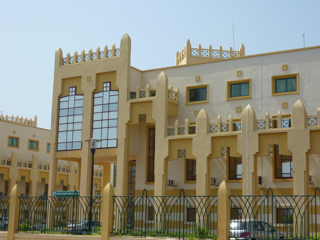
The Cité Administrative – a gift of “Le Guide”

In the other camp are those who, like Abdoulaye Barry, the Africable editorialist mentioned above, think the man could do no wrong. For them he was, more than anything else, a powerful symbol of African resistance to external domination. He was The Guide, a visionary ruler who espoused African unity in the face of Western hegemony. People in this camp see Qaddafi as a titan on par with Nelson Mandela. Qaddafi died, they will tell you, because the imperialists and neocolonialists resented his defiance and coveted his oil. And he died a worthy death, fighting to the bitter end. To listen to this narrative, you wouldn’t know that the man had been overthrown and, finally, killed by his own people with relatively little encouragement from the outside world. You wouldn’t know that he begged for his life. You wouldn’t know that Tripoli was thronged with jubilant crowds when news of his death emerged.

Many members of this second camp believe that “the media” conspired to misrepresent Qaddafi and his achievements, and to demonize him in the eyes of the global public. They see behind virtually everything that happens around the world the sinister hand of Western power. And anyone who dares stand up to the West — the Saddams, Chavezes, Ahmedinejads, and Mugabes of the world — has won their unending respect. Never mind these leaders’ mismanagement of their economies or what they may have done to their own people; it is enough that they said “no” to the great powers — unlike their own leaders. “Those who rule us are bought and paid for by the West; being African isn’t a source of pride like it was with [founding Presidents of Mali and Guinea] Modibo Keita, Sekou Toure and others,” wrote one commenter on Maliweb.  There’s a fascinating research project  waiting to be conducted on how people in Bamako judge political power and its legitimate application in geopolitics. I for one would love to know how people wind up in these various ideological camps.

A few members of the second category of Qaddafi supporters see nothing wrong with brutal leadership. As someone recently commented on Maliweb, “Qaddafi killed people, didn’t Bush kill people too? You [Malians] praise Samory, Sunjata, and Babemba [precolonial Malian rulers], didn’t they kill people? Please, one cannot govern without shedding blood. Do those who approve of killing Qaddafi think that the Libyan people are worth more than the Syrian people?” Statecraft in this view is an intrinsically violent affair, and those who criticize the abuses committed by some must ignore the abuses of others.

In explaining Qaddafi’s downfall, some Malians point to a Western plot against him; others see it as part of a wider uprising against dictatorship in the Arab world. But still others view things in more localist terms: a theory making the rounds in town holds that the Libyan leader’s fall from power stems from his acquisition of the Hotel Marietou Palace right here in Bamako.
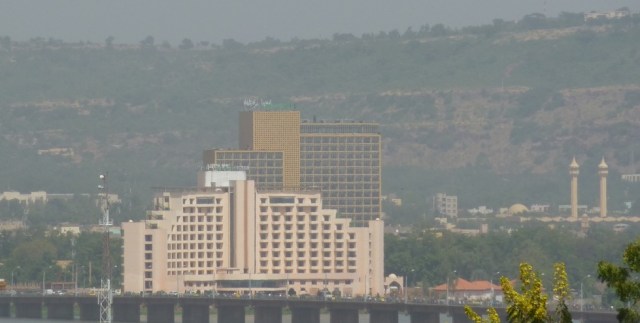
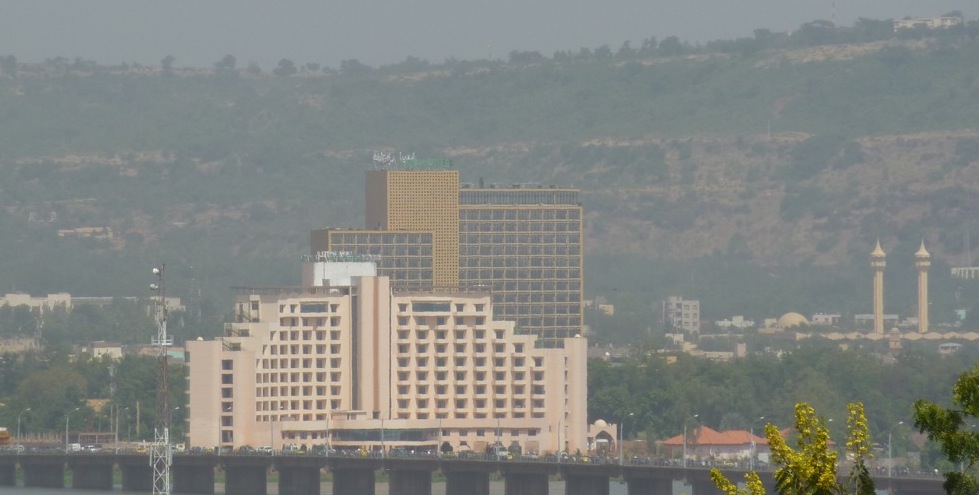
Cursed? Bamako’s Hotel Marietou Palace, under Libyan ownership. (Background: The Hotel de l’Amitié, also owned by LAICO.)

In the late 1990s, a mysterious Malian billionnaire named Foutanga “Babani” Sissoko was the talk of Bamako. Sissoko’s mysterious aura grew from the fact that he never explained where and how he got his billions. His generosity was legendary. At the height of his power and fortune, he used to ride in a motorcade of Hummers down Bamako’s avenues (this was before anyone was driving Hummers except Arnold Schwarzenegger and the U.S. military); his minions would throw piles of banknotes out the windows to the crowds of people who’d line the streets waiting for him to pass by. He started up his own airline and named it after his hometown. And he purchased land on the edge of the Niger River in Bamako and began constructing a huge luxury hotel, the Marietou Palace, named after his mom.

Shortly after this acquisition, Sissoko’s luck suddenly changed. His fortunes dried up, his airline went under and he found himself under an international arrest warrant for fraud. The hotel’s facade sat unfinished, an empty carcass overlooking the river. It became a den of squatters and vagrants. And it stayed that way for several years.

In 2007, the Libyans bought the place. Or, as Malians like to say, Qaddafi bought it. (Malians have long personified all Libyan affairs in the figure of Libya’s late president. I’m not sure they were wrong to do so.) It took a few more years for work on the structure to resume. In fact construction on the hotel was still underway until recently, when (perhaps because of the unrest in Libya) work once again ground to a halt. And quite a few Bamakois have come to the conclusion that the hotel, or the site on which it stands, suffers from some kind of curse. Perhaps the builders inadvertently destroyed an animist shrine or power object when they cleared the site. Perhaps they somehow offended the water spirits that live in the river. In any case, by this logic, the Hotel Marietou Palace first brought down Babani Sissoko, and now it has brought down Qaddafi.

As an anthropologist, I don’t find it strange anymore that even educated, rational people should revere a brutal tyrant. Nor am I surprised that people link a troubled hotel project in Mali to a Libyan president’s fall from power. These are the kinds of ideas and thought processes that made me want to become an anthropologist in the first place.

I wonder if Libya’s new leaders will put the Marietou Palace on the market again soon. Anyone want to buy an unfinished hotel?

Postscript: As another example of how geopolitical events are often understood in localist terms, many Malians believe that Qaddafi’s mother was a Tamasheq from the Malian town of Kidal (some say Timbuktu). I have found no solid confirmation of this on the web, but I have found speculation that his mother was actually Jewish! Also, a protest march by Qaddafi’s many supporters in Bamako was scheduled for this Friday, to target the US and French embassies, but it was reportedly canceled over fears of violence and “bad publicity”.

Update, June 11, 2012: According to today’s edition of the state-run newspaper L’Essor, construction on the hotel (renamed “Hotel Afriqiyah” by its Libyan owners) has been completely halted since the end of the Qaddafi regime, and there’s no sign of work resuming anytime soon.

Update, August 27, 2016: The former Marietou Palace, still unfinished, is now under the management of a Moroccan firm named Iqtane, whose website displays promising images of what it hopes the hotel will look like someday in the indefinite future. Meanwhile some of Iqtane’s contractors in Bamako are reportedly pursuing legal action over alleged nonpayment of funds.

Posted in Uncategorized | Tagged , , , | Leave a comment

Bamako’s Parc National

Until recently, if you were looking for a place to go in Bamako approximating the Western notion of a “park,” you were basically out of luck. The city has its share of plazas, squares and monuments, but none intended for people actually to spend time in, unless you count the street vendors who have gradually colonized most of Bamako’s public spaces.

In late 2010, however, a new space opened up next to the National Museum. It is simply called le Parc National du Mali, and it offers Bamako residents new possibilities for leisure.

The central promenade

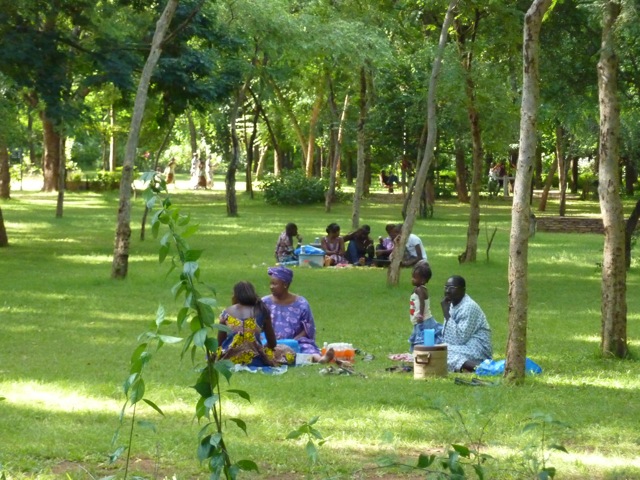
The new park, which sits on 17 hectares of land, was funded by the Aga Khan Trust for Culture and is run in partnership with the Malian government.* The site used to be a seldom-visited arboretum. It is still home to thousands of trees, including many unusual and rare species, which now share space with walkways, gardens and recreational equipment.

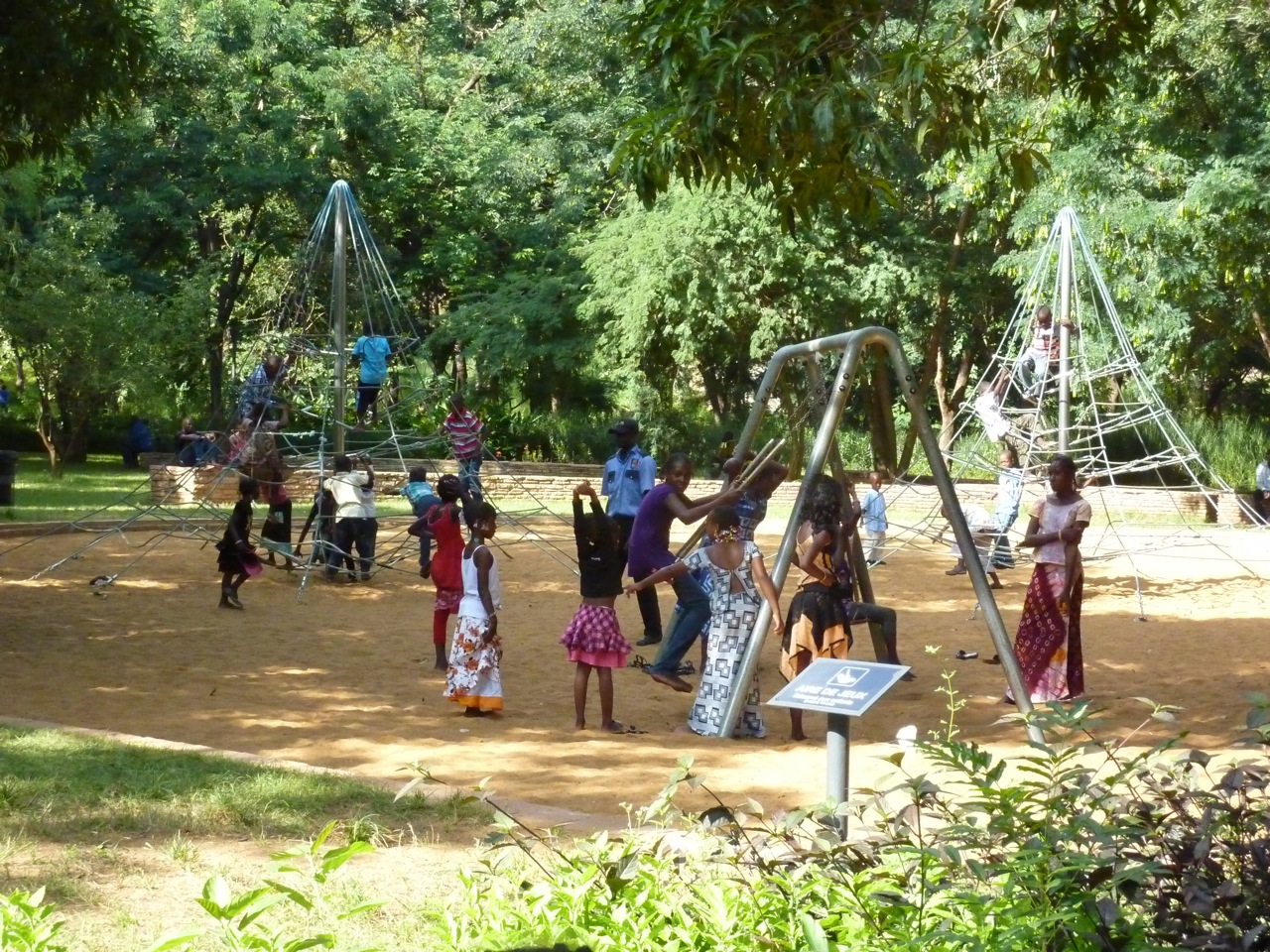
The park includes a fitness trail, a bike path, a gymnasium (restricted to paying members), several eateries ranging from basic to upscale, a child care center and three separate playgrounds for children.

One of three playgrounds in the park

Access to the park isn’t free. It costs the equivalent of US$1 for a Malian adult, $0.60 for a Malian child, $3 for a foreign adult and $2 for a foreign child. This fact does limit the number and range of people who can visit, yet on average the park receives 500 visitors per day. It’s been a big success overall, and for good reason: there is literally no place else in town where children can play on swings, families can picnic in the grass, or couples can relax together in a safe, pleasant natural setting.

As an observer of Malian society and culture, I’ve been particularly interested to see mixed-sex pairs or groups of young people just hanging out in the park, behaving in ways they aren’t allowed to elsewhere. You don’t see kissing or heavy petting or anything like that– this is Mali, after all, where public displays of affection range from low-key to nonexistent. But you do see men and women holding hands and generally being close to one another. It’s hard to do this outside the park without attracting unwanted attention from relatives and neighborhood gossips. Inside the park, however, there seems to be an assumption of some degree of privacy. So the park’s semi-public, semi-private status is fitting.
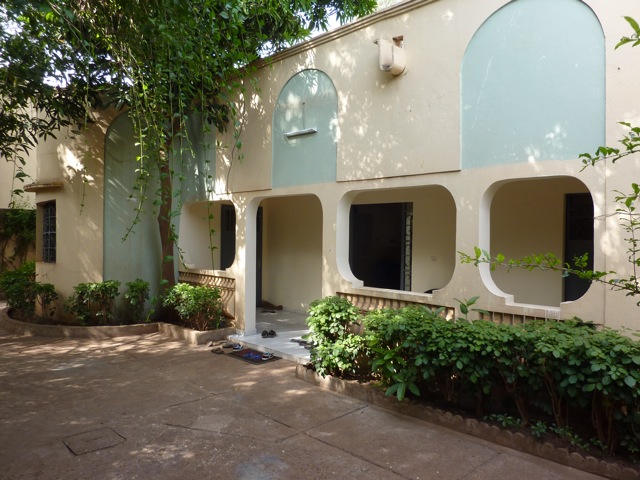
The Parc National du Mali has quickly become one of my children’s favorite places in Bamako. It makes for a welcome getaway from the city’s noise, traffic and pollution. We look forward to many return visits.

* Most Bamakois I’ve asked are unaware of who exactly funded this park. One young man told me it was “a wealthy Arab,” while a cab driver said he’d heard the money came from Muammar Qaddafi!

Postscript, 4 October 2013: Located adjacent to the Parc National, Mali’s National Zoo has reopened after being closed for more than two years for major renovations. See this video from The Guardian website:

Posted in Uncategorized | 1 Comment

Settling in Bamako

Back in the old days –the late 1990s– I fancied I was different from your average Western expatriate in Mali. As a Peace Corps Volunteer, I was meant to “live at the level of the population,” to borrow a phrase popular in Peace Corps official discourse. Out in my village in southeastern Mali, I indeed slept under a thatch roof, showered from a bucket, used a pit latrine, got around on my bicycle or on public transport, and ate what my village host family cooked for meals. So I rather looked down on those “expats” in the capital, living in their air-conditioned villas, riding in chauffeured SUVs, buying overpriced corn flakes at the Lebanese-owned supermarkets.

Am I one of them now? As a Fulbright Scholar in Bamako, I don’t exactly live like my compatriots who work as diplomats or aid workers. But I do live pretty well. After arriving here in August 2011, my family and I took about two weeks to find a house that was suitably situated in the Badalabougou neighborhood, close to the Niger River and the university. The place is modest by American standards–three bedrooms, a double parlor, kitchen and two bathrooms. The rent is less than half of our monthly mortgage payment for our house back in Bethlehem, Pennsylvania.

Our house in Badalabougou, Mali

But it still qualifies as un villa in Mali, since it’s made of concrete instead of adobe and thatch. We don’t have to go outdoors to get water or use the facilities. The floors are of ceramic tiles rather than packed earth.

Our dwelling is normally home to six people, two to a bedroom: my wife Oumou and me, our children Rokia and Zachary, my wife’s sister Dourou who studies at the university nearby, and Bah, our baarakela or live-in domestic worker. Most Bamako households that can afford to do so hire a baarakela to help out with cooking, cleaning, laundry, etc. They are usually teenage girls from rural areas with little or no schooling. Bah, who comes from Oumou’s mother’s family, at least finished eighth grade. She arrived in Bamako for the first time just this month. Most baarakelaw get paid the equivalent of US$15-20 per month, plus room and board. When I suggested that we might pay ours a little more than this, my Malian friends warned me not to: If you’re too generous with her, they said, she’ll get lazy and spoiled. To think that 75 cents a day is generous!

Doing laundry in the courtyard

Setting up house in Bamako has turned out to be a long process. It began with three large purchases, each roughly equivalent to one month’s rent:

  1. A new, Chinese-made refrigerator, from the shop of a guy my friend Bakary knows (they’re from the same village).
  2. Mattresses for everyone. These are made in Mali by a company, Fofy, that seems to have a virtual monopoly on the mattress market. The prices are somewhat standardized, so there is not much room for bargaining.
  3. Rattan furniture, which we ordered from a local craftsman at his outdoor workshop. This order consisted of beds, a dining table and chair, a couch, loveseat, two armchairs, a coffee table and an armoire. Oumou haggled long and hard on this order, and its fulfillment has been a very long, gradual process. One month later, we are still awaiting the last item.

Perusing a product catalog at the furniture workshop

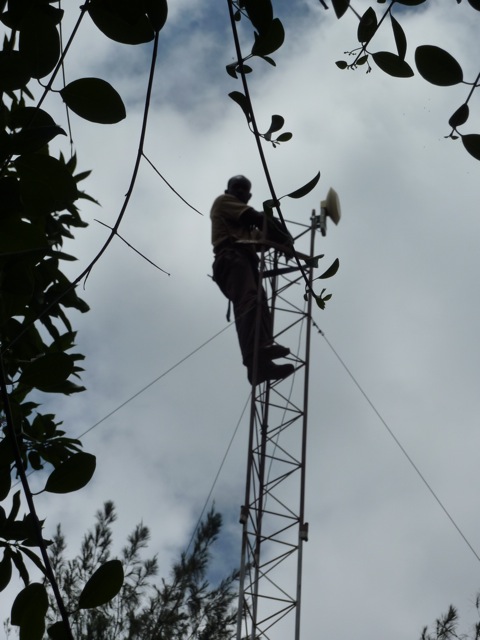
A technician from internet service provider Afribone installs a 20-foot mast on our roof

The next step, an important one for me, was getting an internet connection. You can get DSL if you have a landline, or you can get a slower connection via a tiny 3G antenna that plugs into your USB port. We opted for a middle path, getting a wireless antenna installed on our roof that gives us web access that’s decent, but not quite as fast as we’re used to in the States. To load and view a Youtube video, for example, takes at least two to three times as long as the video’s actual duration. Still, it means not having to go to a cybercafe to send and receive e-mails. Rokia can still play her favorite games on PBSkids.org, and I’m using it to post this blog. The service costs about US$65 a month. (That’s three baarakelaw!)

With these steps complete, we turned to smaller acquisitions (kitchen and dining utensils, bedding, and appliances) to add to what we’d brought with us. One big discovery during this stage was a rather new retail business known as “A Thousand and One Wonders,” which may be the closest thing Bamako has to a department store.

The checkout counter at “One Thousand and One Wonders”

It’s owned by a gentleman from the northern region of Gao who, legend has it, made his fortune selling and servicing soft-serve ice cream machines in Ghana. (Note the ice cream cone featured on his building’s facade, below right.)

The exterior of “One Thousand and One Wonders,” in Bamako’s ACI 2000 neighborhood

Heretofore, when shopping in Bamako, you’ve generally had to go to a multitude of small businesses to find what you’re looking for. “One Thousand and One Wonders” now offers one-stop shopping for housewares, appliances, and dry goods. Some of the Lebanese supermarkets are going this route too, with expanded housewares and appliance sections.

You may notice this building’s outward resemblance to a mosque. In fact there is a mosque on the premises, and the store closes for each and every daily prayer, as businesses do in Saudi Arabia. This is most unusual in Bamako. The owner clearly has been influenced by Saudi-style Islam in how he dresses and runs his shop.

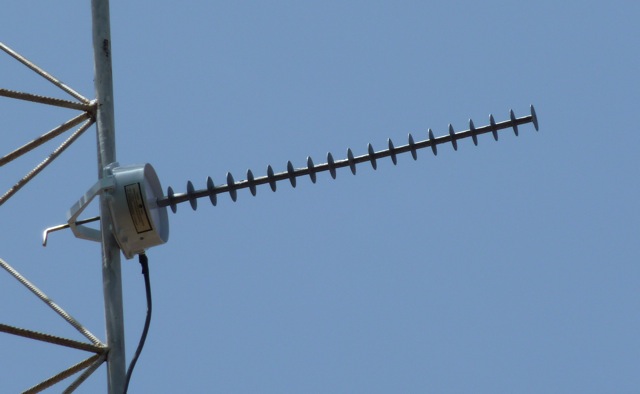
The ubiquitous TV5 antenna

The most recent step in our settling-in has been getting a television. We opted to buy what’s known here as casse (imported used, usually from Europe) rather than new. A 21-inch Philips model cost a little over US$100. For another $20 we purchased a “TV cinq” antenna, and paid a specialist about $4.25 to rig it up properly to our rooftop mast. We now receive three channels: the French satellite channel TV5, the Malian government station ORTM, and a private West African company called Africable. Good for news programs, a variety of telenovelas, and even occasional episodes of American shows like “Army Wives” and “Criminal Minds” dubbed into French. Bah especially likes the telenovelas. But we are trying not to spoil her.

We haven’t yet acquired an air conditioner, as the temperatures have been mostly bearable. But that will change in a few months. By then, I may have completed the transition from “living at the level” to “living like an expat.” What will this transformation mean for my ability to observe and participate in the life of the Bamako residents around me? Will I find myself trapped in the dreaded “expat bubble,” relating primarily to other outsiders like myself?  Of course it helps that I’m married into the local population, that I speak decent Bambara, and have acquired years of life lessons about Malian society. And I still don’t have a car, or even a motorcycle, which means lots of rides in taxis and “Sotrama” minibuses. While I’m on guard against letting myself get too comfortable, I feel I’ve already started down a slippery slope….

Posted in Uncategorized | Tagged | 2 Comments